
Chapter 1: Introductions
What are phages?

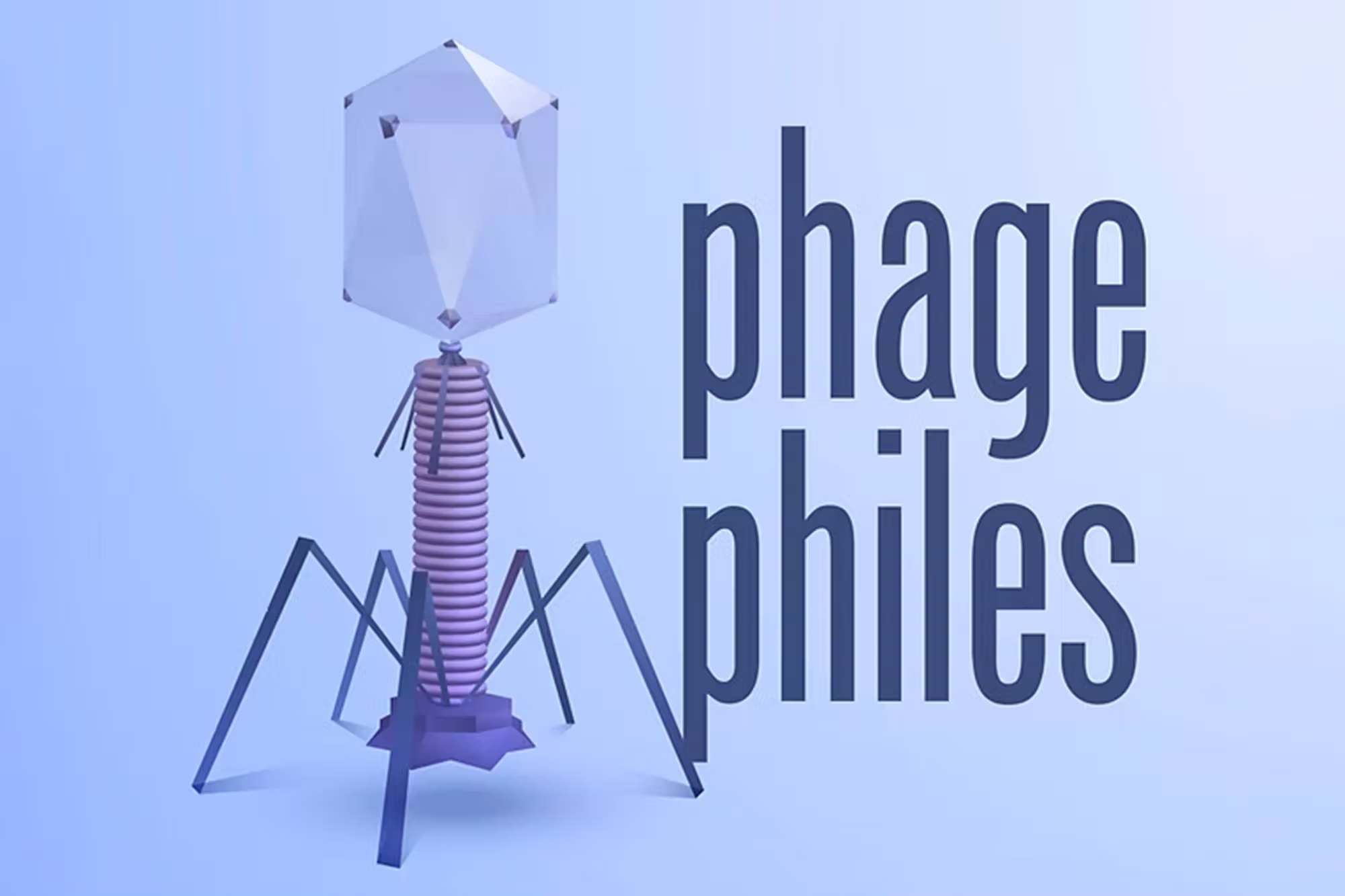
Phages (short for bacteriophages) are highly specialized microbes that target and destroy bacteria in a highly specific manner.
As the most abundant organism on the planet, it is no surprise that phages naturally inhabit the human body. On our skin, an average of one million phages can be found per square centimeter.(1) Diverse phage communities can be found adhered to our skin as well as mucus membranes (such as those found in the nose, mouth, eyes, and digestive tract). These large populations of bacteria-slaying microorganisms provide protection from invaders as part of the body’s natural defense system.(2)
Phages are a lesser-known agent for controlling microbial growth. As nature’s bactericidal ninjas, phages have been implemented against harmful bacteria in various parts of the world for over 100 years.
What are antibiotics?
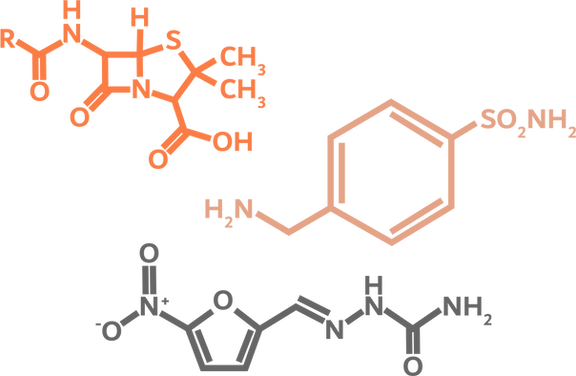
The term “antibiotics” refers to chemical compounds that can be used in humans, animals, or plants to stifle unwanted bacterial growth.
Some antibiotic compounds are derived from natural sources (like fungi or bacteria), with further innovations leading to semi-synthetic and synthetic variations as well. Different classes of antibiotics work in various ways to interfere with the way bacteria grow and replicate, ultimately getting rid of them.
The first antibiotics became commercially available in the 1940s, followed by a plethora of compounds over the next 80 years. Throughout the 20th century, applications for antibacterial compounds expanded to include human medicine as well as animal and plant agriculture, with up to 150,000 tons (about 150 million kilograms) of antibiotics used globally each year.(3)
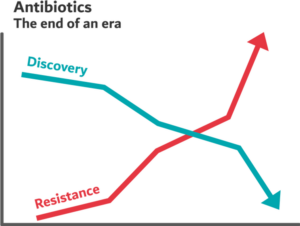
Overall, antibiotics are up against major obstacles as the incidence of antimicrobial resistance is on the rise while the rate of discovery continues to decline.
Chapter 2: Rates of Resistance
Rising rates of antibiotic resistance
Bacteria’s capacity to dodge antibiotics, known as antibiotic resistance, has become an “urgent global risk,” according to the United Nations General Assembly.3 The rates of antibiotic resistance are expanding, along with the variety of microbes that carry resistance. Between the 1980s and the 2000s, the rate of antibiotic resistance in Cutibacterium acnes increased by nearly 40%(4) and continues to rise in populations throughout the world. Vancomycin, considered an antibiotic of “last resort,” was on the market for over 30 years before instances of resistance were reported. Unfortunately, the prevalence rose rapidly, increasing by over 25-fold in just 5 years.(5)
Bacteria can become resistant to antibiotic compounds in many different ways. In some cases, the microbes pass around “resistance genes,” pieces of DNA encoding tools against antibiotic compounds that ultimately allow bacteria to circumvent death. In particular, a resistance gene might prevent antibiotics from infiltrating the bacterial cell, while another could give bacteria the ability to destroy the compound before succumbing to the intended lethal effects.
Many factors contribute to the rapid rate of resistance we are seeing today, including the overuse of antibiotics, which encourage the transfer of resistance genes among bacteria as well as the formation of impenetrable biofilms. With excessive use of these chemicals, bacterial antibiotic resistance continues to become an increasing concern.
Phage so good you just “can’t resist”
Considering the crisis of antibiotic resistance, the possibility of phage resistance becomes a question worth considering. Thankfully, the threat of resistance occurring in phages the way it has with antibiotics is less likely for several reasons.
Firstly, phages are hyper-specific in selecting and attacking their target microbe, rather than being indiscriminately antibacterial as antibiotics tend to be. So, while antibiotics run the risk of driving resistance in any bacterial species that are present, a phage artfully targets only its species of interest while the rest of the microbes remain unaware and unaffected.
Additionally, the way that phages operate to destroy bacteria is fundamentally different from the mechanisms at play with antibiotic compounds. Rather than focusing on jamming up only one specific bacterial process as antibiotics often do, phages hijack multiple essential processes in parallel. Bacteria may craftily dance around the one particular method an antibiotic is using (i.e. resistance), but this is not so easy when phages wreak havoc throughout the entire cell.

Phages surgically pinpoint and effectively eradicate their target species of bacteria, as compared to more bumbling broad-spectrum antibiotics, making phages much less susceptible to the widespread resistance phenomenon that has sabotaged antibiotic efficacy.
Notably, resistance to phage can and does occur, but it looks a lot different than antibiotic resistance. A major benefit of bacteriophages is their extensive “experience” overcoming the resistance efforts of bacteria. In fact, the evolutionary arms race between phage and their bacterial targets has been ongoing for the past 3 billion years or so, since phages came into existence. So, while a sly bacterium may invent a clever tactic to thwart phage attacks, phages will continue to adapt and prevail over their microbial prey—something that antimicrobial compounds are incapable of.
At the same time, experts deploying phages are actively taking additional steps to assuage concerns about resistance. For instance, methods often use mixtures containing multiple phage types aimed at the culprit bacteria, often referred to as “phage cocktails,” since the chance of a microbe simultaneously developing resistance to numerous phages is much less likely.
Chapter 3: Rates of Discovery
Buckets of phage
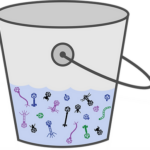
Novel phage discovery can look as simple as a person with a bucket. Phage hunters (like Dr. Benjamin Chan at Yale University) sample water treatment facilities and other waterways to track down the phages they need.(6)
Phages are found where ever bacteria are present. There are more phages on the planet than there are stars in the universe (ten million times as many!). With their astonishing abundance plus extensive genetic diversity, it is no surprise that scientists are often able to find what they are looking for. Notably, phages can be naturally sourced without significant environmental impact.
Once phages are collected, continuously advancing molecular biology techniques allow for rapid screening and identification of the desired phage. The generation of “phage libraries” with carefully characterized phages has proven useful for organizing the huge number of diverse bacteriophages being gathered.
The antibiotic pipeline runs dry
After the introduction of the first compounds in the 1940s, a wide variety of antibiotics continued to be discovered as research boomed throughout the 1960s. However, the golden era of discovery soon lost steam, and many pharmaceutical screening efforts began to come up empty-handed.
The discovery rate of antibiotics started to stumble and has now slowed to a crawl. Between 1983 and 1987, 16 new pharmaceutical antibiotics became available in the US. However, only two new antibiotic compounds came to market during the same number of years spanning from 2008 to 2012.(7)
Chapter 4: Precision
A meticulous microbe
Mounting scientific evidence supports the importance of a balanced microbiome for human health. Beneficial microbes reside in our guts, on our skin, and throughout the body to contribute to our overall homeostasis.(8,9) A loss of microbial balance, known as dysbiosis, contributes to a variety of disorders, such as diabetes, celiac disease, and eczema.(10)
Phage’s carefully focused attacks help to reduce the disruption of non-target bacteria, preserving the balance of the natural microbiome. Thankfully, phages have a notoriously narrow host range, typically honing their sights on only one bacterial species. This allows the utilization of specific phages to selectively target the pathogenic microorganisms only.
On the other hand, antibiotics are quite general in their bactericidal tendencies and can cause collateral damage to the rest of the microbiome. Antibiotic compounds do not distinguish between the problematic bacteria and the resident bacteria that we don’t want to disturb.
Chapter 5: The battle with biofilms
Busting biofilms with bacteriophage
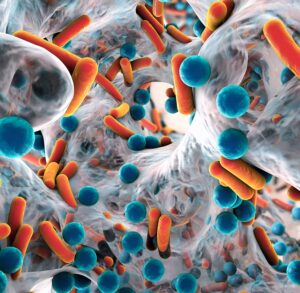
Individual bacterial cells can work together to form complex, robust communities known as biofilms. Some bacteria produce elaborately layered biofilms composed of sticky, secreted polysaccharides, proteins, and DNA, that help them to adhere to tissues and protect the embedded microbes.
Bacteria in a biofilm tend to cause more trouble than their planktonic (free-floating) counterparts. For example, the materials of Cutibacterium acnes biofilm, combined with sebum and shedding dead skin cells, can clog pores to incite blemish formation and associated inflammation.(11) In fact, scientific studies have found that C. acnes biofilm is more pronounced within the pilosebaceous glands of blemished skin as compared with healthy skin.(12)
Many antibiotics cannot effectively infiltrate biofilms to kill the microbes inside, further contributing to antibiotic resistance.(13)
Fortunately, many phages can infiltrate and destroy problematic bacterial biofilms. Specifically, these phages express biofilm-degrading enzymes that can break down existing biofilms and impede the formation of new ones.
Epilogue: Phages for the skin
The power of bacteriophages has been recognized. Biocogent has developed DermaPhage® CA to utilize all of phages’ potential for the improvement of blemish-prone skin. To learn more, visit the DermaPhage CA page.
References & additional resources:
- 1 Zárate, S., Taboada, B., Yocupicio-Monroy, M. & Arias, C. F. Human Virome. Archives of Medical Research 48, 701-716, doi:https://doi.org/10.1016/j.arcmed.2018.01.005 (2017).
- 2 Barr, J. J. et al. Bacteriophage adhering to mucus provide a non-host-derived immunity. Proc Natl Acad Sci U S A 110, 10771-10776, doi:10.1073/pnas.1305923110 (2013).
- 3 Lin, D. M., Koskella, B. & Lin, H. C. Phage therapy: An alternative to antibiotics in the age of multi-drug resistance. World J Gastrointest Pharmacol Ther 8, 162-173, doi:10.4292/wjgpt.v8.i3.162 (2017).
- 4 Coates, P. et al. Prevalence of antibiotic-resistant propionibacteria on the skin of acne patients: 10-year surveillance data and snapshot distribution study. Br J Dermatol 146, 840-848, doi:10.1046/j.1365-2133.2002.04690.x (2002).
- 5 Dodds, D. R. Antibiotic resistance: A current epilogue. Biochem Pharmacol 134, 139-146, doi:10.1016/j.bcp.2016.12.005 (2017).
- 6 Chan, B. K. et al. Phage treatment of an aortic graft infected with Pseudomonas aeruginosa. Evol Med Public Health 2018, 60-66, doi:10.1093/emph/eoy005 (2018).
- 7 Boucher, H. W. et al. 10 x ’20 Progress–development of new drugs active against gram-negative bacilli: an update from the Infectious Diseases Society of America. Clin Infect Dis 56, 1685-1694, doi:10.1093/cid/cit152 (2013).
- 8 Flowers, L. & Grice, E. A. The Skin Microbiota: Balancing Risk and Reward. Cell Host Microbe 28, 190-200, doi:10.1016/j.chom.2020.06.017 (2020).
- 9 La Flamme, A. C. & Milling, S. Immunological partners: the gut microbiome in homeostasis and disease. Immunology 161, 1-3, doi:10.1111/imm.13247 (2020).
- 10 Schippa, S. & Conte, M. P. Dysbiotic events in gut microbiota: impact on human health. Nutrients 6, 5786-5805, doi:10.3390/nu6125786 (2014).
- 11 Burkhart, C. G. & Burkhart, C. N. Expanding the microcomedone theory and acne therapeutics: Propionibacterium acnes biofilm produces biological glue that holds corneocytes together to form plug. J Am Acad Dermatol 57, 722-724, doi:10.1016/j.jaad.2007.05.013 (2007).
- 12 Jahns, A. C. et al. An increased incidence of Propionibacterium acnes biofilms in acne vulgaris: a case-control study. Br J Dermatol 167, 50-58, doi:10.1111/j.1365-2133.2012.10897.x (2012).
- 13 Flemming, H. C. et al. Biofilms: an emergent form of bacterial life. Nat Rev Microbiol 14, 563-575, doi:10.1038/nrmicro.2016.94 (2016).