
Personal Care Global | September 2023
Melisa DeGroot, Rebecca Held, Paul Lawrence, Joseph Ceccoli – Biocogent
MARINE INGREDIENTS | SARGASSUM
The ocean covers over 70% of the planet and includes many diverse marine environments. With some of the Earth’s most extreme habitats, rich biodiversity has evolved to survive and even thrive in these dynamic high-stress environments despite extreme temperatures, pressure, oxidation, salinity, and light levels.
Reportedly used over 5,000 years ago in ancient Mesopotamia as a lip colourant, marine-based personal care ingredients are more than a temporary trend. Ocean-derived products are a prevailing staple in the industry, including emulsifiers, waxes, sensorial ingredients and active ingredients sourced from the ocean. The industry has continuously evolved these products to meet consumer needs and expectations. Today, a growing field of scientific research helps to understand the full potential of marine materials for use in the cosmetics and personal care industry.
Phlorotannins for UV protection
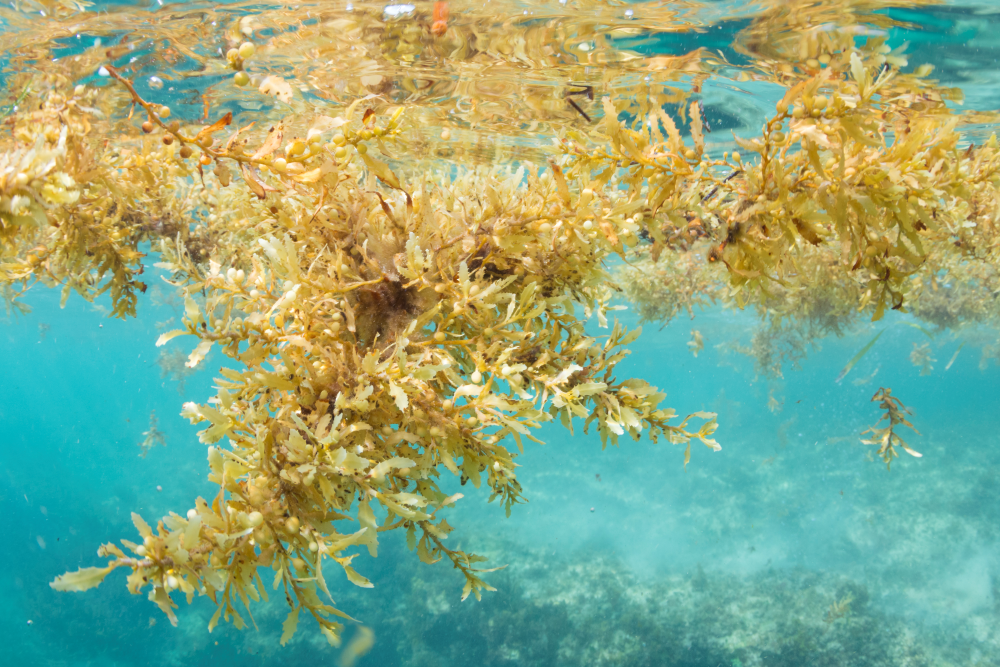
Sargassum is a brown alga that floats freely in the ocean’s open waters, supported by its distinctive air bladders. The intense sunlight at the water’s surface fuels photosynthesis in the growing algal masses, which proliferate through vegetative reproduction with small fragments generating new plants.
Intense sun exposure at the water’s surface makes Sargassum more vulnerable to the harmful effects of UV radiation, which can cause DNA damage and impact growth, overall health, and survivability.
In response to the sun’s harmful UV radiation, Sargassum produces phlorotannins (polymers of phloroglucinol; 1,3,5-trihydroxybenzene), with a mixture of soluble and insoluble versions found throughout the leafy appendages of most brown algal species.
Research has demonstrated that these phlorotannins are photoprotective and mitigate the DNA damage incurred by brown algae exposed to the incessant UV at the sea’s surface.
In fact, algae increase their phlorotannin production in response to UV exposure, facilitating reduced UV-induced damage. The high phlototannin content of Sargassum gives the potential for developing innovative Sargassum-based anti-ageing skin care products.
The Great Atlantic Sargassum Belt
For centuries, intermittent patches of Sargassum have inhabited the Atlantic, but since 2011, the Sargassum mats have expanded, stretching over 5,000 miles from West Africa to the Gulf of Mexico.
The mass of Sargassum, known as the Great Atlantic Sargassum belt, has an estimated weight of 13 million tons and can be spotted from space. Sargassum continues to grow, with scientifically-backed predictions suggesting that the Sargassum belt is likely to persist as the new norm.
In response to the persistent Sargassum belt, ongoing efforts to harvest excess Sargassum to incorporate into functional products aim to alleviate potential negative consequences of algae accumulation.
The valorization of Sargassum through upcycling has regenerative impacts on coastal ecosystems and communities while generating sustainable, naturally derived products in the food, agriculture, medicinal, textile, and cosmetic industries. Sargassum-based items include papers, fabrics, building materials, biofuels, and livestock feed.
Upcycling Sargassum with biofermentation to address photodamaged skin
DermalRx FSE (hereafter, the Sargassum bioferment, is rich in bioavailable phlorotannins and other phytochemicals with multiple demonstrated benefits for sun-exposed skin. Produced from Sargassum vulgare brown seaweed, the Sargassum bioferment helps protect and repair DNA through NER pathway while modulating downstream gene expression, beneficially affecting levels of both microRNAs (miRNAs) and messenger RNAS (mRNAs) that support skin wellness at the molecular level.
In addition, the Sargassium bioferment further soothes photodamaged skin by delivering potent anti-inflammatory and antioxidant activity.
Bioferments, in general terms, are products produced using biofermentation, bioconversion, or other bioprocessing techniques where specific biofunctional materials are derived from the metabolic activity of living microorganisms. Yeast (Saccharomyces) and bacteria (such as Lactobacillus or Bifidobacterium) metabolize biomass and carbon sources under specified conditions to yield the desired active ingredients.
Related Products